What Purple Cacao Beans Reveal About the Chocolate You're Eating
Прочети на български
The beans arrive in a burlap sack, and the first thing you notice is the colour. Not the rich brown of a finished chocolate bar, but something closer to a bruised plum, deep violet, almost purple. Most people assume this is what cacao looks like. They're half right.
That purple hue is a message. It tells you something happened, or didn't happen, thousands of kilometres away, on a farm you'll never visit, in a process that took place before the beans were even dried. The colour is a record of fermentation, the invisible craft that determines whether chocolate will taste flat and astringent or complex and alive.
The Colour Code Most Consumers Never Learn
Most raw cacao beans are violet or purple in their natural state. A few varieties, certain Criollo strains, for instance, are white or light rose. But the majority start purple. Here's where it gets counterintuitive: if that purple colour persists through processing and into the final product, it usually indicates the cacao was not well fermented.
This isn't a defect you can taste immediately, but it shapes everything. Poorly fermented beans produce chocolate with a harsh, tannic edge, the kind of bitterness that sits on your tongue without resolving into anything interesting. Well-fermented beans, by contrast, develop the precursors to the flavours we associate with good chocolate: fruit notes, nuttiness, that long finish that makes you reach for another piece.
The transformation happens in the first five to seven days after harvest, when the beans are piled in heaps or wooden boxes and left to ferment. Microorganisms break down the pulp surrounding the beans, generating heat and triggering chemical changes inside the seed itself. The purple anthocyanins oxidise and break down. The colour shifts from violet toward brown. If fermentation is cut short or poorly managed, the purple remains, a visible signature of incomplete work.
Why Fermentation Is the Invisible Foundation
In Sofia's growing craft chocolate scene, conversations tend to focus on origin and roasting. Where did the beans come from? How dark is the roast? These are valid questions, but they skip over the stage that matters most. Fermentation happens at origin, on the farm, before the beans are dried and shipped. By the time a roaster in Sofia receives a sack of cacao, the fermentation is already locked in. No amount of careful roasting can fix what went wrong at the source.
This is the literacy gap in how most people, even some makers, think about chocolate. We've learned to ask about single-origin and terroir, borrowing vocabulary from wine. But fermentation, which is arguably more determinative of flavour than any other single factor, remains invisible in most conversations.
The work itself is labour-intensive and skilled.
Farmers must monitor temperature, humidity, and timing. They turn the beans at precise intervals. Different methods, heap fermentation, box fermentation, tray fermentation, produce different flavour profiles. This isn't chemistry that happens automatically; it's craft that requires attention and experience.
What This Means for Makers and Buyers
For Sofia's craft chocolate makers, sourcing from farms with rigorous fermentation practices is non-negotiable. The colour lesson is a gateway: once you understand what purple means, you start asking different questions. Not just "where is this from?" but "how was it fermented? For how long? By whom?"
Makers like Flow Cacao, who work directly with Latin American farms, treat fermentation quality as foundational. They ask about fermentation protocols before they discuss price. It's why their single-origin bars taste the way they do, the flavour was built at the farm, not rescued in the roastery.
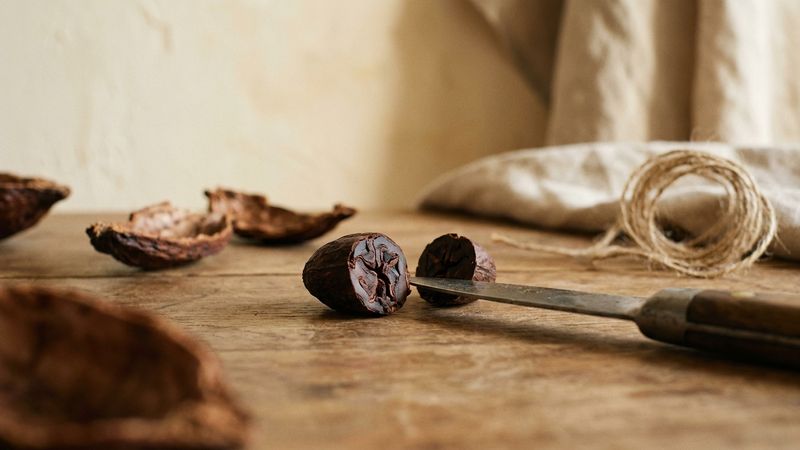
For consumers, the colour lesson is simpler but no less useful. When you break a piece of craft chocolate and see purple streaks in the cross-section, you're looking at a record of what happened at origin. It doesn't mean the chocolate is bad, other factors matter too, but it's a clue. And clues are how you start to understand what you're tasting.
The Taste That Follows the Colour
Now that you know what the purple means, chocolate tastes different. Not because the flavour has changed, but because you're reading it differently. That slight astringency in a bar you bought at the market? Maybe it's the fermentation. That long, fruity finish in a single-origin from Ecuador? Also the fermentation.
The next time you visit a craft chocolate maker in Sofia, or anywhere, ask about fermentation. Not as a test, but as a conversation. The colour is just the beginning.
Frequently Asked Questions
Q: What does purple colour in raw cacao beans indicate?
A: Purple colour in raw cacao beans is natural, most beans start out violet. However, if that purple persists through processing into the final chocolate, it usually indicates incomplete or poor fermentation, which can result in flat or astringent flavours.
Q: How long does cacao fermentation typically take?
A: Cacao fermentation typically takes five to seven days. During this time, beans are piled in heaps or wooden boxes while microorganisms break down the surrounding pulp, generating heat and triggering the chemical changes that develop chocolate's flavour precursors.
Q: Can roasting fix poorly fermented cacao beans?
A: No. Fermentation happens at origin before beans are dried and shipped. By the time a roaster receives the beans, the fermentation quality is already locked in. Careful roasting can enhance good fermentation but cannot compensate for poor fermentation.
The Artisan