The Farmers Behind the Fermentation Boxes
Прочети на български
The beans arrive still wet, coated in the sticky white pulp that will become their flavour. In the Semuliki Forest of western Uganda, near the Congolese border, a farmer tips them into tiered wooden boxes where they will ferment for six or seven days. Twice daily, someone checks the temperature. The process is precise, unhurried, and has been refined across generations.
This is not a story about charity. It is a story about craft.
Why a Sofia Reader Should Care
The same questions driving specialty coffee culture in Sofia, who grew this, how was it processed, what does traceability actually mean, are reshaping how cacao moves from farm to bar. In Sofia, Flow Cacao works with a similar direct-trade philosophy, sourcing single-origin beans from Latin America. The model emerging from Uganda's Semuliki Forest reflects a global conversation about craft sourcing, and Sofia's growing bean-to-bar scene is part of it.
The Semuliki cacao comes through Latitude Trade Company, a vertically integrated B Corp founded in 2016. They work with 4,664 certified organic smallholder producers in the Bundibugyo District. The demographics are striking: nearly 49% are women, and 69% are under 35. This is not a fading tradition sustained by elderly growers. It is a dynamic community with inherited expertise and modern ambitions.
The People Growing the Beans
The farms are small, one to two hectares each, often intercropped with bananas, cassava, and shade trees. The volcanic soil and tropical climate create conditions that specialty cacao requires. But conditions alone do not make quality.
Many farmers inherited their plots and the knowledge that comes with them. Generational expertise means understanding when to harvest, how to ferment, when the beans are ready. This is accumulated craft knowledge that produces consistently high-quality cacao.
The gender balance matters. Nearly half the producers are women, bringing different approaches to farm management and community organisation. A farming community where more than two-thirds are under 35 is not clinging to the past. It is building something.
What Direct Trade Actually Means
Latitude Trade Company operates more than 50 rural collection points where farmers sell fresh cacao weekly. They receive premium cash prices at the point of sale, 20 to 30% above local market rates. This is money in hand, immediately.
Direct trade differs from fair trade certification in a crucial way: it prioritises relationships over paperwork. Fair trade sets minimum standards and requires certification fees. Direct trade builds long-term partnerships where the buyer knows the farmer, visits the farm, and pays based on quality rather than commodity pricing.
The certifications still exist, Certified Organic, Fair for Life, B Corp status, but they support rather than replace the relationship.
A chocolate maker can trace their beans back to a specific forest, a specific community, a specific process.
The Craft After Harvest
Post-harvest processing is where cacao becomes chocolate-worthy. Fermentation happens in tiered wooden boxes over six to seven days, with twice-daily temperature monitoring. This controlled process develops the complex flavour molecules that distinguish fine cacao from commodity beans.
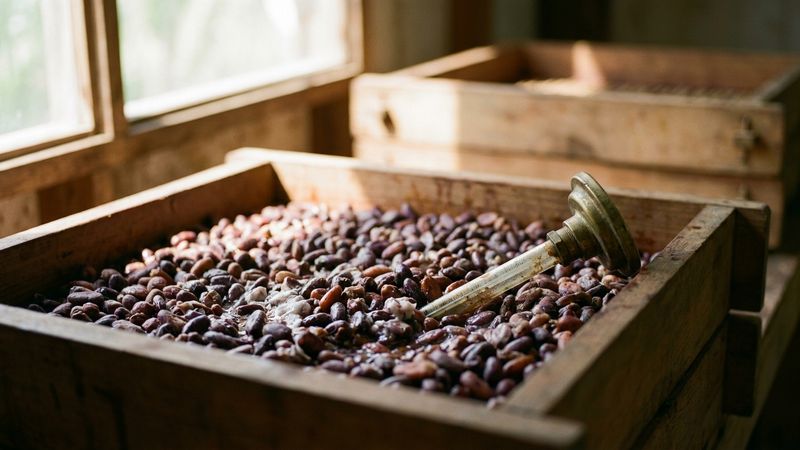
After fermentation, beans sun-dry on raised beds for another six to seven days. Then comes sorting, four separate stages of hand-selection before export. The result is a flavour profile of raisin, fig, and warming spice, with balanced sweetness and a clean finish. These are not marketing adjectives. They are the direct consequence of volcanic soil, careful fermentation, and meticulous sorting.
What Traceability Offers
Knowing where your cacao comes from offers something simple: connection. The same impulse that makes a specialty coffee drinker ask about processing methods applies here.
When a Sofia-based chocolate maker sources beans with this level of transparency, they participate in a supply chain that values the farmer's expertise as much as the final product. The 4,664 producers in the Semuliki Forest are not anonymous suppliers. They are craftspeople whose work determines whether the chocolate is worth making.
Frequently Asked Questions
Q: What is the difference between direct trade and fair trade cacao?
A: Direct trade prioritises long-term relationships between buyers and farmers, with prices based on quality rather than commodity rates. Fair trade sets minimum standards and requires certification. Latitude Trade Company pays farmers 20-30% above local market prices at the point of sale, without requiring farmers to pay certification fees.
Q: How many farmers produce Semuliki Forest cacao?
A: Latitude Trade Company works with 4,664 certified organic smallholder producers in Uganda's Bundibugyo District. Nearly 49% are women and 69% are under 35 years old, reflecting a young and gender-balanced farming community.
Q: What does the post-harvest process involve for Semuliki cacao?
A: Beans ferment for 6-7 days in tiered wooden boxes with twice-daily temperature checks, then sun-dry on raised beds for another 6-7 days. Hand-sorting occurs at four stages before export. This process produces flavour notes of raisin, fig, and warming spice.
The Artisan