
The Equipment Question: Why Smooth Chocolate Starts Before the Beans
Прочети на български
A bar of chocolate breaks cleanly. The surface catches light. Everything looks right. Then it hits the tongue, and something is off: a graininess that shouldn't be there, a texture that coats the mouth unevenly, a finish that feels unresolved. Most people blame the cacao. The maker knows better.
The difference between chocolate that melts and chocolate that grinds is rarely about the beans. It's about what happened to them after roasting.
Sofia's Makers and the Foundation They're Building
Bulgaria's bean-to-bar scene is young. In Sofia, a handful of makers work with single-origin cacao from Latin America and Africa, learning the craft through trial, YouTube, and the occasional workshop abroad. Some operate from garages. Others share commercial kitchen space. The ambition is real; the infrastructure is catching up.
This is not a criticism. Every craft chocolate movement starts somewhere. But as Sofia's makers scale from hobby batches to market stalls to proper production, one conversation keeps getting deferred: the equipment question.
The source material for this piece grounds the argument in Beckett's Industrial Chocolate Manufacture and Use, the standard reference for understanding how industrial standards emerged. The core insight is simple: smooth chocolate is a technical outcome, and it depends on machines that do their job consistently.
What "Smooth" Actually Means
Chocolate texture comes down to particle size. When cacao nibs are ground, the goal is to reduce every solid particle to below 20 microns (millionths of a metre). At that size, the human tongue cannot detect individual grains.
Above 25 microns, grittiness creeps in. Above 30, it's unmistakable.
Achieving this requires two things: a grinder (or melanger) that can reach and maintain that particle size, and a conching process that refines texture and develops flavour over time. Conching involves heating and aerating the chocolate mass for hours, sometimes days. It drives off volatile acids, rounds out harsh notes, and further smooths the texture.
Both steps depend entirely on equipment. A grinder that overheats will damage the cocoa butter. A conche that runs unevenly will leave pockets of unrefined mass. A machine that cannot hold temperature will produce inconsistent results batch after batch.
The Equipment Spectrum
Not every maker needs industrial machinery.
But every maker needs machinery that performs the same task the same way every time.
The spectrum runs from home-scale melangers (stone grinders adapted from Indian wet grinders, often under €1,000) to semi-professional units (€2,000 to €10,000) to full commercial lines that cost as much as a flat in Lozenets.
The temptation is to start cheap and upgrade later. This makes sense for learning. It becomes a problem when later never arrives, and the maker compensates with workarounds: longer conching times, higher cocoa butter ratios, or accepting inconsistency as artisanal character.
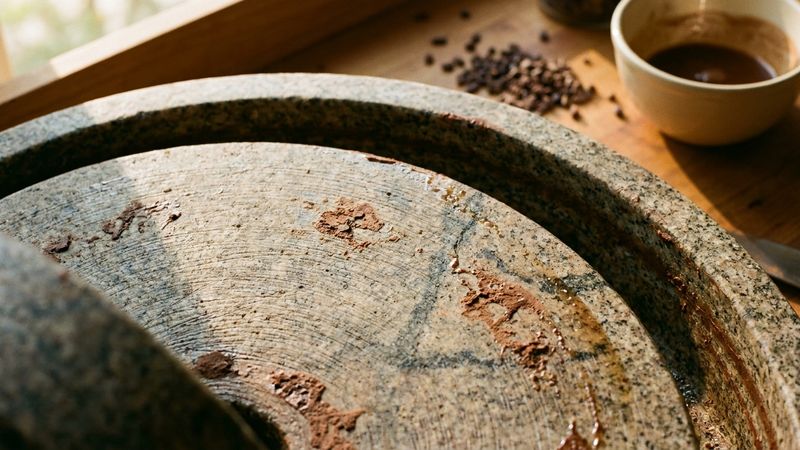
In Sofia, Flow Cacao offers one example of a maker who has thought carefully about this progression. Working with single-origin beans from Latin America, they've invested in equipment that allows precise control over roasting and processing. The result is drinking chocolate with a texture that reflects that investment.
The Hidden Cost of Shortcuts
The real expense of inadequate equipment is not the machine itself. It's the waste: batches that don't meet texture standards, cacao that could have been excellent but ends up merely acceptable, time spent troubleshooting problems that better machinery would have prevented. And eventually, the ceiling: the point where a maker cannot improve their product further because the equipment won't allow it.
This is not about gatekeeping. It's about being honest with yourself about what your tools can and cannot do.
A Promise Kept
Smooth chocolate is a promise. When someone breaks off a piece and puts it in their mouth, they're trusting that the maker has done the work. Equipment is where that care becomes tangible. The question is not whether you can afford the right equipment. It's whether you can afford to keep working without it.
Frequently Asked Questions
Q: What particle size should chocolate reach to feel smooth?
A: Below 20 microns. At this size, the human tongue cannot detect individual particles. Above 25 microns, grittiness becomes noticeable; above 30, it's unmistakable.
Q: How do I know if my grinder is the problem?
A: If your chocolate consistently feels gritty despite adequate conching time, or if texture varies significantly between batches processed the same way, the grinder likely cannot achieve or maintain the required particle size. Test by comparing against a known smooth reference.
Q: Is expensive equipment always better for small-batch chocolate making?
A: Not necessarily. The key is consistency, not price. A mid-range machine that performs reliably every batch is more valuable than a cheaper unit requiring constant adjustment. Prioritise temperature control, particle size precision, and build quality over brand prestige.
The Artisan