
The Bakery That Never Closes: Twenty Years of Wood-Fired Bread in Galicia
Прочети на български
The stone oven has been lit since before midnight. By the time the first customers arrive at Panadería Vilaboa in Culleredo, the bread has already been fermenting for five or six hours, the dough shaped by hand, the crust formed by oak and chestnut smoke. Margarita Paradela has been awake since 11:30 p.m. She will not finish until mid-afternoon. This has been her schedule for twenty years, without a single day off.
The bakery sits on Rúa da Calzada in Culleredo, a municipality in the A Coruña region of Galicia. From the outside, it looks unremarkable. Inside, the operation runs on a logic that most modern bakeries abandoned decades ago: one dough mixer, a stone wood-fired oven, and everything else done by hand. The bread is still sold by weight, a practice that has nearly vanished across Spain.
A Mirror for Sofia's Craft Scene
Artisanal bakeries are disappearing across Europe. The pressures are familiar: automation reduces labour costs, younger generations leave the trade, and customers accustomed to supermarket prices balk at what handmade bread actually costs. Bulgaria faces the same erosion. Sofia's craft food scene, still young and fragile, watches as traditional producers close or compromise. Panadería Vilaboa is not unique in its struggle. It is unique in its survival.
What keeps a bakery open for two decades without a break? The answer is not nostalgia. It is a daily transaction of trust between a maker and her community.
Crust That Crackles, Crumb That Lasts
Paradela insists that the wood-fired oven transforms the bread in ways that electric or pellet ovens cannot replicate. The crust crackles differently. The crumb stays moist longer. The flavour carries a depth that comes from slow fermentation and radiant heat. These are not abstract claims; they are the reasons between 100 and 200 people visit the bakery every morning, many buying extra loaves to freeze because they refuse to eat anything else.
The process is deliberately slow. Each loaf rests for five to six hours before baking. The fermentation is left to time and temperature, not accelerants. The result is bread that behaves differently in the mouth and lasts differently on the counter. For customers who have grown up with this bread, the difference is not subtle.
Fifteen Hours, No Holidays
Paradela's workday begins at 11:30 p.m. and can stretch to fifteen hours. She has not taken a holiday in twenty years. This is not presented as heroism; it is the unglamorous reality of running a one-person artisanal operation. The bakery's signature products, roscas and bollas and handmade empanadas filled with bonito, cod, cockles, or roasted pork with peppers, require her presence at every stage.
The empanadas are made entirely by hand and sold only in the shop. The dough is rolled out, the fillings prepared, each one assembled individually. There is no shortcut that preserves the result.
At 55, Paradela is beginning to think about succession.
She came to baking unexpectedly, having worked in an office before meeting and falling in love with a baker. Years of learning followed, then two decades of running the family bakery. The question of who continues the tradition is real, but it is not the story. The story is that the bakery is alive now, and the community keeps it that way.
"The Oven" on Rúa da Calzada
For many residents of Culleredo, Panadería Vilaboa is simply "the oven," a term that echoes earlier generations when the local bakery was a communal fixture. Some of the bread is distributed to A Coruña, but most stays on the bakery's shelves for local customers. The relationship between maker and community is tangible, built on years of consistency.
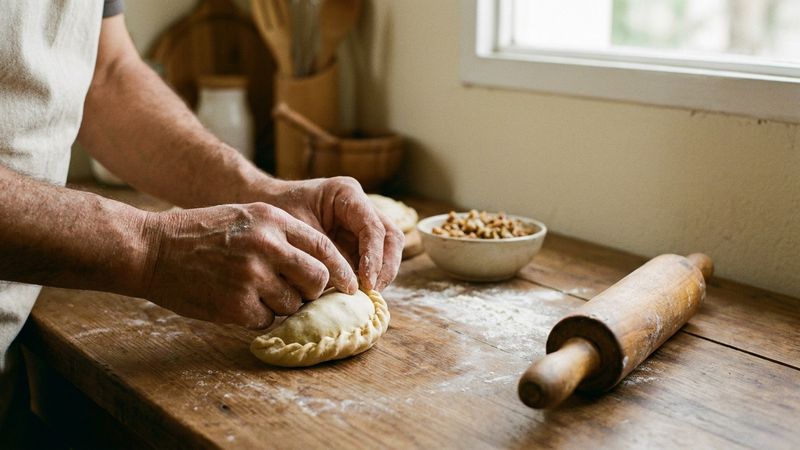
Paradela can judge a loaf by its aroma, texture, and the sound of its crust. When she eats out, she instinctively inspects the bread, searching for signs of quality. For her, bread is a language.
This is the lesson for Sofia and for any city where craft food is trying to survive: artisanal work does not persist through tourism or heritage branding. It persists through daily, unglamorous commitment to quality that a community trusts enough to build their lives around. The bakery survives because Paradela chose the harder path and stayed, and because her customers chose her bread over everything else, every single day.
Frequently Asked Questions
Q: What makes wood-fired bread different from bread baked in electric ovens?
A: Wood-fired ovens produce radiant heat that creates a crackly crust and a moister crumb. The slow fermentation process, typically five to six hours at Panadería Vilaboa, develops deeper flavour that electric or pellet ovens cannot replicate.
Q: How does Panadería Vilaboa maintain quality without modern automation?
A: The bakery uses only one dough mixer; all other steps are done by hand. Bread is sold by weight, and fermentation relies on time and temperature rather than accelerants. This requires Margarita Paradela to work up to fifteen hours daily.
Q: Where is Panadería Vilaboa located?
A: The bakery is on Rúa da Calzada in Culleredo, a municipality in the A Coruña region of Galicia, Spain. It serves between 100 and 200 customers daily.
The Artisan