The door closes and something shifts. Not dramatically, not with ceremony, but with the kind of quiet that makes you notice you've been holding tension in your shoulders. White walls. A black bar. Gray floor. No music competing for attention, no visual clutter demanding you look here, then there. Just space, and within it, the sound of water heating, the soft clink of ceramic.
This is what happens when a coffee shop decides that emptiness is not absence, but intention.
Sofia's Third Path
Sofia's specialty coffee scene is still finding its shape. Walk down ul. Tsar Shishman or through Oborishte on a Saturday morning and you'll find cafes that have mastered extraction, sourcing, the art of latte foam. What's rarer is a space designed around the idea that how you experience coffee matters as much as what you drink.
Some chase the Instagram aesthetic, others the high-volume model. But there's a third path, one that a small Vancouver roastery called Hiyori Coffee has just demonstrated: build a space that teaches people to slow down, and let the coffee do the rest.
Ma: The Space Between Objects
Hiyori, which opened in late May 2026 at 279 E 6th Ave in Vancouver, takes its name from a Japanese word associated with sunny, peaceful weather. But the design philosophy runs deeper.
The cafe is built around ma, a Japanese principle that treats empty space not as something to fill, but as something with its own meaning. In practice: deliberate silence, restrained objects, open space that doesn't apologise for itself.
These elements together create a space where guests can sit comfortably without distraction and focus entirely on the coffee experience.
Shinya Furue
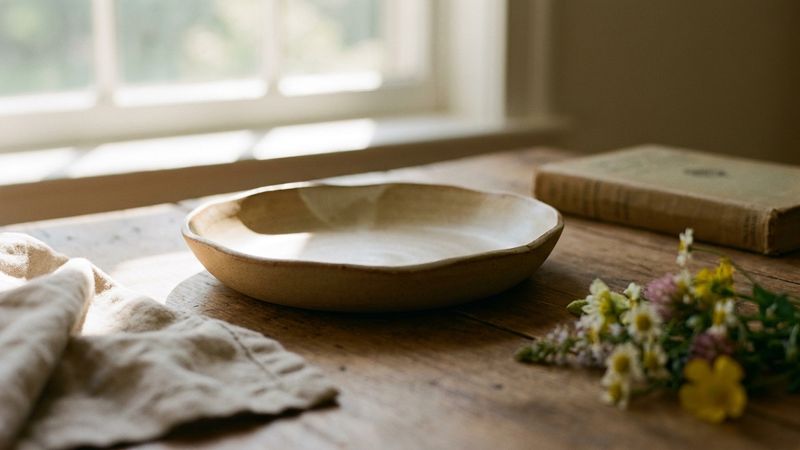
The bench seating draws from Japanese engawa, the transitional space between inside and outside in traditional architecture. A flexible lighting system, inherited from the art gallery that previously occupied the space, adjusts for different times of day. Coffees arrive in handmade clay cups imported from Japan.
This is not minimalism as aesthetic trend. It's minimalism as function, as hospitality.
Competition Pedigree, Then Patience
Furue and his partner Eri Horie didn't arrive at this philosophy by accident. Furue won the 2023 Canadian AeroPress Championship and placed third in 2025. Horie placed second in 2024. Before opening the cafe, they spent two years running pop-ups, selling whole beans, and refining their approach.
Their sourcing reflects the same precision: relationships with Macarena Coffee Importers, Apex Coffee Imports, and Common Goal Coffee.
They roast on a Loring S15 Falcon, Diedrich IR-12, or Stronghold S7 Pro through shared facilities.
Quality is our top priority. We particularly focus on flavor clarity, selecting coffees with bright acidity and well-balanced sweetness that allow each lot's character to come through clearly.
Shinya Furue
Всяка пукнатина разказва история за произход, който никой етикет не може да предаде.
In the cafe, AeroPress is the only filter method, ground on a compact Femobook A68. Espresso runs through a La Marzocco Strada X with pressure profiling, paired with a Mazzer Kony S grinder.
One Space, Done Well
What makes Hiyori worth watching isn't just the design or the competition pedigree. It's the deliberate restraint.
We currently roast for a small number of wholesale accounts, but we do not plan to expand this aggressively. Specialty coffee culture is still developing in Vancouver, and we hope to contribute to growing that community by introducing more people to specialty coffee in an accessible way.
Shinya Furue
No rush toward multiple locations, no aggressive wholesale push. Instead, refinement. The belief that one space, done well, can shape a community more than ten spaces done quickly.
For Sofia, where specialty coffee culture is also still developing, this offers something worth considering. Not a template to copy, but a question: what would it mean to build a cafe around the idea that the pause matters as much as the pour?
The answer might look like white walls and gray floors. Or it might look entirely different. But the question itself changes what's possible.
Frequently Asked Questions
Q: What is the Japanese concept of "ma" in cafe design?
A: Ma refers to meaningful empty space, treating openness not as absence but as intentional design. In Hiyori Coffee's case, this manifests through deliberate silence, minimal objects, and open space that encourages guests to slow down and focus on the coffee experience.
Q: What brewing methods does Hiyori Coffee use?
A: Hiyori serves AeroPress as their only filter coffee method, ground on a Femobook A68 grinder. Espresso is prepared on a La Marzocco Strada X machine with pressure profiling, paired with a Mazzer Kony S grinder.
Q: When did Hiyori Coffee open and where is it located?
A: Hiyori Coffee opened in late May 2026 at 279 E 6th Ave in Vancouver, BC. The company was founded in 2024 by Shinya Furue and Eri Horie, who spent two years doing pop-ups and whole-bean sales before opening the physical cafe.
The Slowmade Letter: what happened in the city this week, gathered into one letter.
By subscribing you agree to receive the Slowmade Letter once a week at this address. You can unsubscribe with one click, at any time. How we handle your data
Analytics cookies
We use Google Analytics and Microsoft Clarity to understand which stories get read and how you move around the site. Nothing is recorded without your consent. The cookies needed to sign in always work. Learn more